Advertorial & health disclaimer: This is a paid advertisement for AudiLeaf, a dietary supplement. It is not a news article and not medical advice. AudiLeaf is not intended to diagnose, treat, cure, or prevent any disease. Individual results may vary. Talk to your doctor before starting any supplement. Adults 18+ only.
The "Two-Minute Ear Ritual" Is Real. But Almost Everyone Is Doing It Wrong — and It's Why the Ringing Comes Back Every Night.
You've seen the videos of people describing a simple nightly ritual that helps quiet the ringing in their ears.
What those videos leave out is the one detail that decides whether it works or not: it has to do two different jobs, in the right order.
If You've Tried Everything and the Ringing Never Fully Stops, Keep Reading
Let me guess.
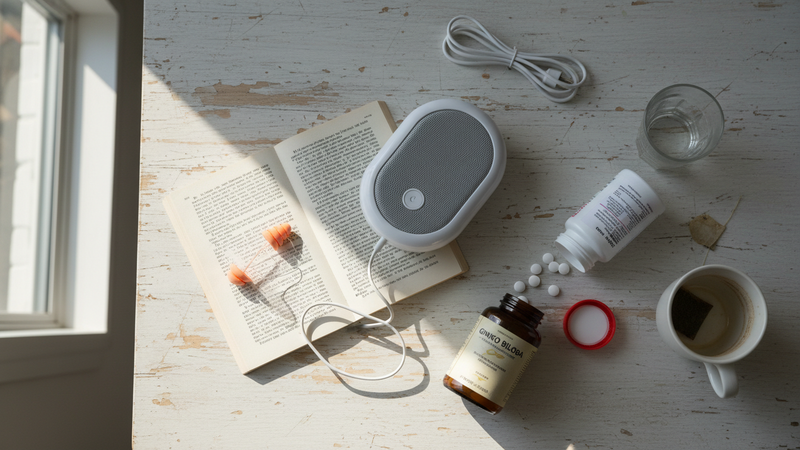
You've tried everything. Earplugs. White noise machines. Ginkgo biloba.
Zinc. Melatonin gummies from the drugstore. Maybe even a prescription, just to take the edge off at night.
Maybe you sleep with a fan on every single night, just so there's something else to listen to.
And the ringing is still there the moment the room goes quiet.
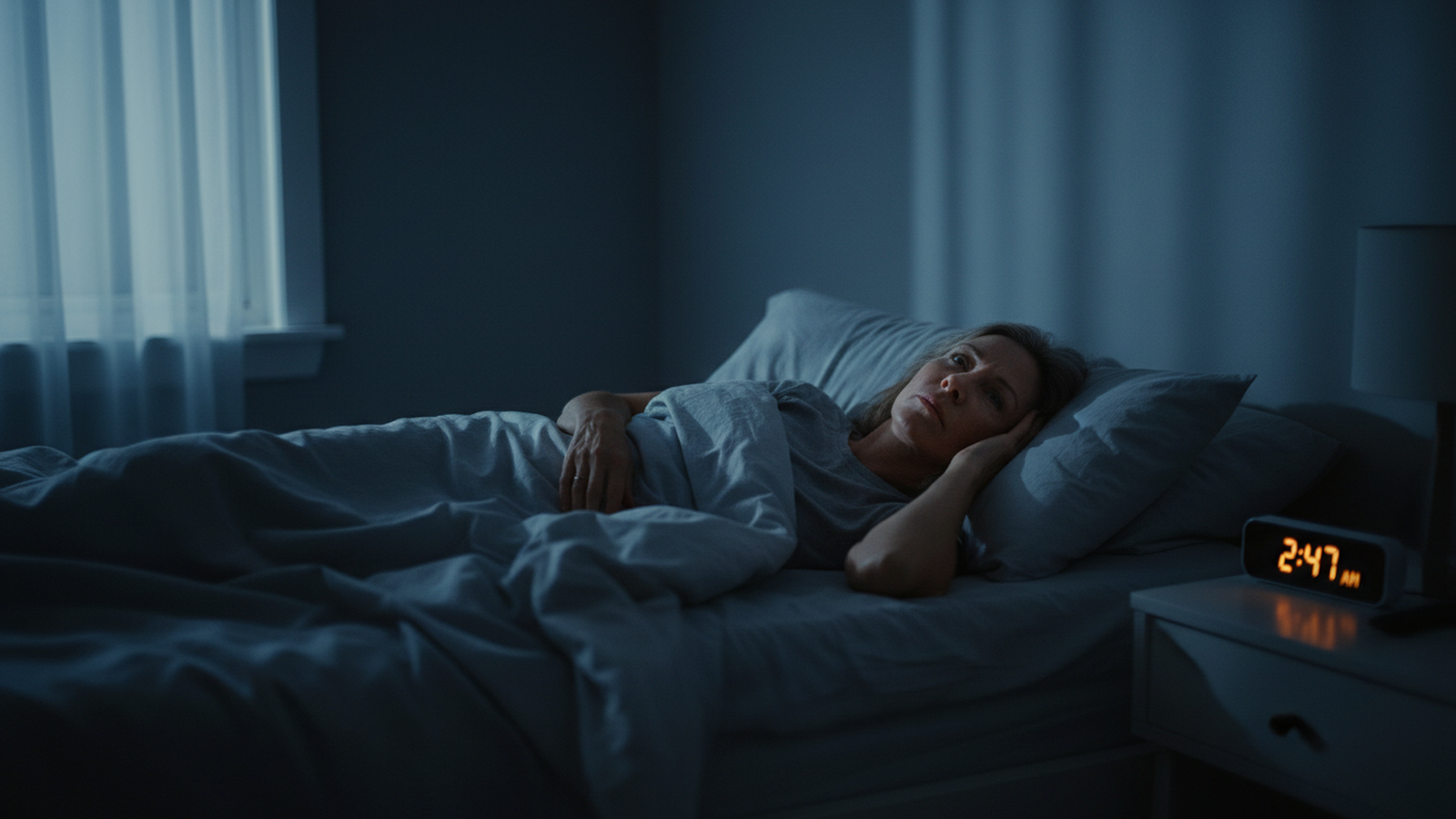
You lie down and it's the loudest thing in the room.
You've started avoiding silence altogether — the car, the shower, the moment before you fall asleep.
Then someone tells you the three most frustrating words a person can hear:
"Learn to live with it."
I know how that feels. Because I once said those exact words to someone I love.
And I have never regretted anything more.
What I discovered afterward is something almost nobody explains:
Tinnitus is usually not one problem. It's two separate problems happening at the same time.
Most remedies only touch one of them. That's why so many people try one thing after another and end up convinced "nothing works."
In a moment, I'll show you both — and the simple approach that finally made a difference in my family.
But first, you need to know how I found out.
I Told My Mother to "Just Get Used to It." I Was Completely Wrong.

My name is Diane. I'm not a doctor or an audiologist — I write about health, and I read research for a living.
My mother, Elaine, started hearing a faint ringing in her left ear at 58.
Her doctor ran a hearing test, called it mild age-related hearing loss, and said the ringing would "probably fade into the background over time."
So when she told me it was getting louder, I repeated what everyone says:
"You'll get used to it. Try not to focus on it."
I minimized what my own mother was going through.
And it took one phone call, late at night, for me to understand how wrong I was.
So I Tracked Every One of Her Nights for Two Weeks. The Pattern Surprised Me.

My mother had never had trouble sleeping a day in her life.
But little by little, she started leaving a fan running all night, just to have something to compete with the sound.
She stopped reading in bed, because the quiet minutes before sleep had become the worst part of her day.
And she woke up exhausted, even after eight hours in bed.
Until one night she called me and said:
"Diane, I'm not asking it to disappear. I just want one quiet room that doesn't feel like a battle."
For the next two weeks, I tracked everything: when she went to bed, what she'd tried, and exactly when the ringing bothered her most.
When I laid those two weeks side by side, one thing jumped out.
The ringing wasn't actually louder at night. It only felt that way — because nothing else was competing with it anymore.
And the more tired she got, the harder it became to ignore during the day, too.
That's when I stopped accepting "learn to live with it" as an answer.
At 1:00 A.M., I Finally Understood What Was Happening Inside Her Ear

I spent weeks reading publicly available research and health resources (sources are listed at the end of this article).
And the first piece of the puzzle turned out to be something I had never once connected to ringing ears: circulation.
Deep inside the inner ear are thousands of tiny hair cells. They depend on a steady supply of blood and oxygen to keep working normally.[1][2]
That supply can be affected by age, years of noise exposure, and other health factors.[2][3]
An ear running "short" on what it needs, all day, every day.
That explained why the ringing never really went away — no earplug or fan was doing anything about it.
But it didn't explain why the nights were so much worse.
That answer came from somewhere completely different.
You're Not "Noticing It More" at Night. Your Brain Is Turning Up a Signal That Has Nothing Left to Compete With.

Here's what's really going on, in plain terms.
The ringing isn't a sound coming in from outside. It's a signal your own hearing system produces.[3][4]
During the day, traffic, voices and the TV partly cover it up.
At night, in a quiet room, it has the stage all to itself.
That's why so many people with tinnitus say it bothers them most in bed.[4][5]
So now there were two separate problems:
- Problem #1: an inner ear under constant strain, day after day.
- Problem #2: a nighttime signal with nothing left to compete against it.
Fix only the first, and the nights are still unbearable.
Fix only the second, and the strain underneath is never addressed.
That's the part almost nobody explains — and it's exactly why "nothing works" for so many people.
There Are Four Ways People Usually Try to Deal With This. Three of Them Only Ever Solve Half the Problem.
Once I understood there were two problems, the question became simple:
How do you support the ear and calm the nighttime signal — at the same time?

Way #1: Masking Sound
Fans, white noise machines, sound apps.
They help while they're running. The moment you turn them off, everything is right back where it was — because nothing changed underneath.

Way #2: Single-Ingredient Pills
Ginkgo. Zinc. B12. A random bottle from the drugstore.
Maybe you've tried one and felt nothing. That's not surprising.
One ingredient can only do one job — and usually in a form or amount that was never designed for either of the two problems above.

Way #3: Prescription Medication
Sleep aids, anti-anxiety medication, sometimes antidepressants prescribed by a doctor.
These are legitimate treatments and they help many people. Always follow your doctor's guidance — nothing in this article replaces it.
 +

Way #4: A Formula That Does Both Jobs
This is the one almost nobody talks about.
Not one ingredient — a combination of plant-based ingredients, built so that one part supports the ear and the other helps the body wind down at night.
This is what finally started to change things for my mother.
But the combination alone wasn't the secret. The detail that made the difference is something most people get backwards.
Support the Ear. Then Calm the Signal. In That Order.
Each part does a completely different job.
Skip either one, and the whole thing falls apart. That's why people who try "half" of it rarely see what they were hoping for.
Part One: Support the Ear
The first part is about the inner ear itself — helping it cope with the everyday strain of noise, age and stress, instead of leaving it to run on less than it needs.
This is the slow, steady part. It's why consistency matters more than anything.
But on its own, it does nothing for the moment you lie down and the signal takes over the room.
Part Two: Calm the Nighttime Signal
The second part works with your body's natural evening rhythm — the exact window when the ringing has nothing left to compete with.
This is the part people usually notice first: the nights stop feeling like a battle.
Support. Then Calm.
That's the whole idea.
Simple to understand. Surprisingly hard to get right on your own.
Why You Can't Just Grab a Few Bottles at the Drugstore
That was the first thing I tried. It didn't work. Here's why:
1. The form matters as much as the ingredient.
Many common forms are poorly absorbed. A label can list the right name and still deliver very little of what your body can actually use.
2. The amounts on the shelf vary a lot from product to product.
Too little does almost nothing. Too much of one part can work against the other.
3. The parts have to be balanced against each other.
The form, the amount and the balance aren't details. They are the entire formula.
After months of frustration, I stopped trying to piece it together myself and went looking for someone who had already done it properly.
It took a while. Most products I found only did one of the two jobs — or hid their amounts behind a "proprietary blend."
And then I found one that got it right.
I Watched My Mother Get Her Nights Back

I want to be careful here, because I'm not going to tell you the ringing disappeared. It didn't, and nothing honest would promise that.
Two weeks in, she mentioned she'd fallen asleep before the fan had a chance to run through the night.
Five weeks in, she told me: "It's still there. It's just not the only thing in the room anymore."

Eight weeks in, she was reading in bed again.
A small thing — until you remember she'd given it up entirely.

Then her friends started asking what she was doing differently. And their friends after that.
Which is why I'm writing this article.
The Formula Is Called AudiLeaf
It's called AudiLeaf — an ear health support supplement made with plant-based ingredients.
And one detail surprised me right away: it isn't a pill.
It's a liquid, in a small dropper bottle. No big capsules to swallow — which, for my mother, was a relief all by itself.
What won me over was that it was built around the same two-part idea I'd spent months piecing together:
- Support for the ear — every single day, not just when the ringing flares up.
- Help winding down at night — the window when the ringing usually takes over.
- One simple routine — a few seconds a day, taken as directed on the label.
I want to be clear about what it is not.
It is not a medication. It is not a miracle cure, and it won't make tinnitus vanish overnight.
It's a daily supplement designed to support your ears — and in my mother's case, it helped give her nights back.
What's Inside AudiLeaf
According to the manufacturer, each serving (1 mL, about 2 droppers, once daily) contains:
- Chromium (as Chromium Picolinate) — 7 mcg (20% DV). An essential trace mineral that supports normal energy metabolism.
- 200 mg Proprietary Herbal Blend, which includes:
- Grape Seed Extract (20:1). A source of proanthocyanidins, antioxidants studied for their role in supporting healthy circulation.
- Green Tea Leaf Extract. Contains catechins, antioxidants that help defend cells from everyday oxidative stress.
- L-Arginine. An amino acid the body uses to make nitric oxide, which plays a role in normal blood flow.
- Ginseng Root Extract. A traditional adaptogen used to support energy and the body's response to daily stress.
- Eleutherococcus Senticosus (Siberian Ginseng, 20:1 root). An adaptogenic root studied for stamina and the normal stress response.
- Astragalus Membranaceus (20:1 root). A traditional herb used to support healthy circulation and normal immune function.
- Maca Root Extract (20:1). Traditionally used to support natural vitality and stamina.
- GABA and L-Tryptophan. Amino acids that support a relaxed nervous system and the body's natural evening wind-down.
Ingredient information is provided by the manufacturer and may change. Always read the Supplement Facts label on the product before use. If you take medication (especially for blood pressure, blood thinning, or blood sugar), are pregnant or nursing, or have a medical condition, talk to your doctor first. These statements have not been evaluated by the Food and Drug Administration.
You can also review the full Supplement Facts label on the official AudiLeaf website before you decide anything.
Opens the official AudiLeaf website
How Much Does AudiLeaf Cost?

Let's talk about money, because it matters.
Sound machines, drugstore bottles, and everything else people try along the way add up — for many people, hundreds of dollars, with little to show for it.
When I checked the official website, AudiLeaf had three packages available:
- 2 bottles — to try it out.
- 3 bottles — the most popular option.
- 6 bottles — the lowest price per bottle, with free shipping.
Most people choose 3 or 6 bottles. Partly to save money, and partly because the ear-support part takes consistency — once your nights start changing, you won't want to interrupt it.
Best Value on the Official Site
6-BOTTLE PACKAGE + FREE SHIPPING
$49Per bottle
Backed by a 60-day money-back guarantee.
Prices were accurate when this article was written. The manufacturer sets its own prices and may change them at any time — check the official website for the current offer.
60-Day Money-Back Guarantee
You Get a Full 60 Days to Decide
I know you've already spent money on things that didn't deliver.
That's why this part matters: every AudiLeaf order comes with a 60-day money-back guarantee.
Use it as directed. If you're not happy with how your nights feel, contact the company within 60 days and ask for a refund.
AudiLeaf 60-Day Guarantee
Try AudiLeaf as directed for up to 60 days.
If you're not satisfied, contact the manufacturer for a refund.
Full terms are available on the official website.
The only real risk is doing nothing while the nights stay exactly the same.
One Important Warning Before You Order
Only order AudiLeaf from the official website linked on this page.
Lookalike versions sold on marketplaces may not be the real product — and the official site is the only place where the 60-day guarantee applies.
And one more thing, because it matters: more is not better. Always follow the directions on the label. Consistency is what counts.

Here's how simple it is:
1. Tap the button below and choose your package on the official site.
2. Enter your information on the secure checkout page.
3. Your AudiLeaf ships directly to your home.
Six Months From Now, Your Nights Will Be One of Two Ways
Here's the truth no one likes to say:
This rarely gets better on its own.
Six months from now, you can still be running the fan all night, dreading the moment the room goes quiet, reading articles like this one.
Or you can be lying down, reaching for a book, and realizing the ringing isn't the only thing in the room anymore.
The saddest thing I hear from people is always the same:
"I wish I'd looked into this sooner."
That doesn't have to be you.

With 60 days to decide, the only thing you need to do today is take a look.
Sources & References
- National Institute on Deafness and Other Communication Disorders (NIDCD). How Do We Hear? nidcd.nih.gov/health/how-do-we-hear
- Nakashima T, et al. Disorders of cochlear blood flow. Brain Research Reviews. 2003;43(1):17-28. PubMed
- National Institute on Deafness and Other Communication Disorders (NIDCD). Tinnitus. nidcd.nih.gov/health/tinnitus
- Henry JA, Roberts LE, Caspary DM, Theodoroff SM, Salvi RJ. Underlying mechanisms of tinnitus: review and clinical implications. Journal of the American Academy of Audiology. 2014;25(1):5-22. PubMed
- Mayo Clinic. Tinnitus — Symptoms and causes. mayoclinic.org
This is an advertisement and not a news article. The story above is a dramatization based on common experiences; names have been changed. The author may receive a commission for purchases made through links on this page. AudiLeaf is a dietary supplement and is not intended to diagnose, treat, cure, or prevent any disease, and it is not a substitute for medical advice. Tinnitus has many possible causes — consult your doctor before starting any supplement, especially if the ringing is sudden, one-sided, or accompanied by hearing loss, dizziness, or pain. These statements have not been evaluated by the Food and Drug Administration. Individual results may vary.